2010 Super Hatchback Concept Car by Jamie Martin

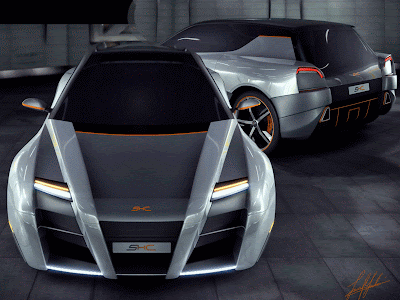
Details on a possible future eco-friendly model, called SHC (Super Hatchback Concept), were revealed by designer Jamie Martin, a UK based designer whose previous works include the Cobra Venom V8 concept and the London Navigator bus. The SHC was conceived out of a desire to fuse the two very different worlds of hatchbacks and supercars. And in a world where limiting CO2 output is becoming increasingly important, the SHC also has some green tech up its sleeve.
2010 Super Hatchback Concept Car by Jamie Martin 
Designed to compete against the likes of the Honda Civic Type-R and Ford Focus RS, the SHC would be offered with a choice of two different engine/transmission packages.
It has similarities to both a supercar and a 3-door hatchback and boasts of both styling and performance characteristics. The concept car is available in a choice of three next generation powertrains, including an electric / hybrid option. Interestingly, the body is composed of 65% Steel and 35% aluminum used for front wings, bonnet & bumpers. Alternatively, 30% glass reinforced plastic can be used for designated sections. 
2010 Super Hatchback Concept Car by Jamie Martin 
Other features include front and rear window ‘air-streams’, combined with hydrophobic and super-fast screen heating and high-intensity LED/Single-Source fiber-optic illumination used on the headlight wing, lower fog light, and rear lights. Martin describes the car to have a “balanced formula of raw power, racing spirit, practicality and eco engine choices.” He said that this means that you have a supercar-inspired drive to use for weekly shopping.
2010 Super Hatchback Concept Car by Jamie Martin 
The first proposed powertrain of the concept consists of a twin-turbocharged internal combustion engine with direct injection, stop-start technology and regenerative braking. Transmission would be via a 6-Speed Short-Shift manual gearbox or a 7-speed paddleshift auto.
2010 Super Hatchback Concept Car by Jamie Martin 
The second option is a system dubbed the 'Delta Drive Hybrid (DDH)'. This setup consists of a smaller displacement internal combustion engine and a pair of electric motors. Nano-Titanate batteries located in the engine bay, and under the floor would feed power to the high-torque electric motors mounted within the front wheels. 3-performance modes would be available: Economy (low bhp town driving), Normal (medium bhp - motorway driving), and Performance (high bhp - utilising both the petrol engine and electric generator together for ultimate power). The car could also be driven in full electric mode for around 70 miles before the engine was needed to recharge the batteries.
2010 Super Hatchback Concept Car by Jamie Martin 
Further highlights of the SHC include a magnetorheological fluid suspension system with Normal, Sport & Track modes. This system, first used by Ferrari, features dampers with iron filings suspended in fluid. When an electrical current is passed through the fluid it instantaneously changes the damping rate and stiffens up the suspension.
2010 Super Hatchback Concept Car by Jamie Martin 
While the SHC is just an independent concept with no intention of production, it does seem more and more likely that hybrid technology will filter very quickly into performance vehicles - and hot hatches could be one of the first segments to make the switch.

2010 Peugeot 5 Concept HYbrid4 Technology

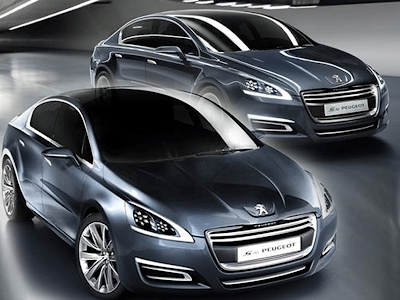
As part of its new Marque project, Peugeot is launching a double product offensive: the development of new markets and the strengthening of its presence in its historic market segments. The Peugeot 5 Concept car is another indication of the changing face of Peugeot and provides an insight into the Marque's future ambitions in the large luxury vehicle segment. Its pure and elegant lines blend with subtle technical detailing to create an overall effect of a timeless, exclusive and modern design.
2010 Peugeot 5 Concept HYbrid4 Technology

A 2.0 litre HDi FAP163 bhp diesel engine, mounted at the front of the vehicle, is combined with a 37 bhp electric motor at the rear. This arrangement provides an overall maximum power of 200 bhp, an electric only mode for low speed operation, four-wheel drive when required, and low fuel consumption and emissions of 74.3 mpg and 99 g/km of CO2 or zero in electric mode. Powered by the automaker's forthcoming HYbrid4 technology, the new 5 by Peugeot features a 163 horsepower 2.0-liter HDi diesel engine driving the front wheels and a 37 horsepower electric motor on the rear axle. This arrangement provides a peak output of 200 horsepower, an electric only mode for low speed operation, all-wheel drive traction when required and a fuel economy of up to 74.3 mpg.
2010 Peugeot 5 Concept HYbrid4 Technology

Its dimensions, proportions and styling are a direct response to the changing trends in the large luxury saloon car market segment. It reflects the continual search for more status, quality and performance, combined with a modernity that encompasses the vehicle's general efficiency in terms of architecture, engines and styling. The'5 BY PEUGEOT' expresses the Marque's vision and experience in the large touring car market. This concept car is designed and built to have both elegance and precision, but without in any way sacrificing the personality and dynamism so beloved of the Peugeot Marque. The emotion aroused by its exterior design holds the promise of exceptional interior space, convenience and comfort.
2010 Peugeot 5 Concept HYbrid4 Technology

At the front, the interpretation of the Marque's traditional feline appearance is spectacular; 'LED' lights are highlighted by the use of illuminated surrounds that blend perfectly with the overall exterior body styling. The headlamps frame a unique front grille design, whose visual appearance is closely influenced by the Peugeot SR1 concept car. The innovative design of the front grille gives the impression that it is detached from the vehicle; it appears to be suspended in front of the car. The new revised Lion badge naturally takes pride of place in a specially shaped area at the front of the long aluminium bonnet.
2010 Peugeot 5 Concept HYbrid4 Technology

The streamlined sides of the car are enhanced further by the bevelled, brushed-aluminium window surrounds and door handles, combined with sculpted 19'' wheel trims. The rear design of the vehicle suggests both robustness and power. The bold design of rear lights, consisting of three separate linked light clusters, clearly distinguish the vehicle at night, but also provides a link back to some of the Marque's historic models.
2010 Peugeot 5 Concept HYbrid4 Technology

Peugeot 5 Concept is further proof of Peugeot's environmental strategy. The modular technology of the Hybrid4 system can be combined with a range of naturally-aspirated engines according to market requirements, and can be fitted to different body shapes and different platforms, helping to ensure future driving enjoyment.
2010 Peugeot 5 Concept HYbrid4 Technology

The elegance, precision and dynamic appearance of the car's exterior styling is also reflected in the car's technical specification. The '5 BY PEUGEOT' concept incorporates Peugeot's HYbrid4 technology which, will be launched in 2011 in the Peugeot 3008.
2010 Peugeot 5 Concept HYbrid4 Technology

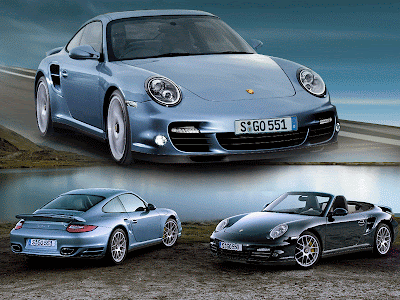
2011 Porsche 911 Turbo S The most efficient Sports Car

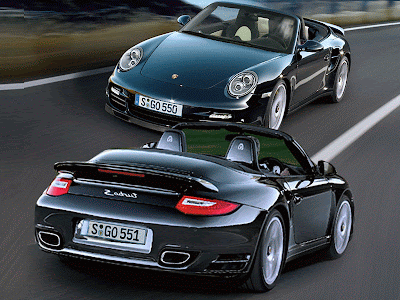
Hot on the heels of the facelifted 911 Turbo comes the more extreme 2011 Porsche 911 Turbo S, which will be making its world debut next month at the 2010 Geneva Motor Show before arriving in local showrooms in the second half of the year. The engineers at Dr. Ing. h.c. F. Porsche AG, Stuttgart, have developed a new top-of-the-range sports car for the customer who will only settle for the very best in terms of power, performance and driving dynamics: the 911 Turbo S. The heart of this most exclusive high-performance athlete is of course a six-cylinder boxer boosted by two exhaust gas turbochargers with variable turbine geometry, with an increase in power over the 911 Turbo by 30 to 530 bhp (390 kW). 
2011 Porsche 911 Turbo S The most efficient Sports Car

Maximum torque is a most impressive 700 Newton-metres (516 lb-ft). At the same time the 911 Turbo S comes as standard with all high-tech components available only as options on the regular 911 Turbo. In addition to its PDK transmission and all-wheel drive system, the latest 911 Turbo S gets Porsche’s dynamic engine mounts and torque vectoring system with a mechanical differential lock on the rear axle.
Despite its significant increase in power and dynamic performance, the new 911 Turbo S, at 11.4 litres/100 kilometres (equal to 24.8 mpg imp), does not consume any more fuel than the Porsche 911 Turbo, making it by far the most efficient sports car in its performance class.
 2011 Porsche 911 Turbo S The most efficient Sports Car

The 911 Turbo S comes exclusively with seven-speed Porsche-Doppelkupplungsgetriebe (PDK) (Porsche’s Double-Clutch Gearbox) conveying drive power to Porsche Traction Management (PTM) all-wheel drive. Driving safety optimised to an even higher standard is ensured by Dynamic Engine Mounts and Porsche Torque Vectoring (PTV) including a mechanical differential lock on the rear axle. In conjunction with Launch Control on the Sport Chrono Package Turbo likewise featured as standard, 911 Turbo S accelerates from a standstill to 100 km/h in 3.3 seconds and reaches 200 km/h in 10.8 seconds. Top speed is 315 km/h or 195 mph. Extra-light and fading-resistant Porsche Ceramic Composite Brakes (PCCB) provide the same outstanding performance in terms of stopping power and controlled application of the brakes.
2011 Porsche 911 Turbo S The most efficient Sports Car

The supreme level of standard equipment including Dynamic Bending Lights, 19-inch wheels in RS Spyder design with central locking, a three-spoke sports steering wheel with gearshift paddles, adaptive sports seats, cruise control, a CD/DVD changer and exclusive twin-tone leather upholstery in Black/Crema or Black/Titanium Blue additionally underlines the outstanding class and calibre of this first Turbo S in five years.
2011 Porsche 911 Turbo S The most efficient Sports Car 

The 2011 Porsche 911 Turbo S will go on sale in Europe in both Coupe and Cabriolet variants this May and will arrive in the U.S. later in the year. Expect more details to be revealed following the car’s debut at next month’s Geneva event.