Showing posts with label Hyundai. Show all posts

2011 Hyundai Sonata Midsize Sports Sedan

Hyundai introduced its all-new 2011 Hyundai Sonata at the 2009 Los Angeles Auto Show. This marked the North American debut of the latest version of the popular midsize sedan, introducing Hyundai's "Fluidic Sculpture" design language and an all four-cylinder engine lineup to the U.S. market. Hyundai Sonata is the second vehicle in Hyundai's 24/7 version 2.0 product initiative (seven new models in the next 24 months) following on the heels of the all-new Tucson. Production of Hyundai Sonata will begin in December 2009 at Hyundai's U.S. plant in Alabama with retail sales beginning in January 2010.
2011 Hyundai Sonata Midsize Sports Sedan
The new Sonata will launch with Hyundai's new Theta II GDI 2.4-liter four-cylinder engine with a Gasoline Direct-Injection (GDI) fuel delivery system, which contributes to improved fuel efficiency and lower emissions. Hyundai Sonata is the first midsize sedan to adopt GDI technology as standard equipment in a naturally aspirated powertain. This shorter, more direct path of fuel delivery, allows for greater control of the fuel mixture at the optimum moment, thus improving efficiency. The fuel is injected by a camshaft-driven, high pressure pump that operates at pressures up to 2,175 psi. Direct injection also utilizes a higher than normal 11.3:1 compression ratio for increased power. The pistons are "dished" to increase combustion efficiency in the cylinder. This powerplant will deliver best-in-class fuel economy, best-in-class four-cylinder horsepower and best-in-class torque.
The Sonata 2.0T, as the car is officially named, is powered by a new 2.0-liter Theta II twin-scroll turbocharged gasoline direct-injection (GDI) engine that produces 274 horsepower at 6,000 rpm and 269 lb-ft of torque from 1800-4500 rpm with regular fuel. The engine is linked to a six-speed automatic transmission with SHIFTRONIC manual control that drives the front wheels. No performance figures were released but Hyundai did announce that the Sonata 2.0T will deliver an estimated 22 mpg (10.7lt/100km) city and 34 mpg (6.9lt/100km) highway.
The 2.0-liter twin-scroll turbo engine will be available on the Sonata SE and Limited trim level, with the Limited getting additional upgrades, including a panoramic sunroof, 18-inch "hyper" silver alloy wheels, dual exhaust system and steering wheel-mounted paddle shifters.
Next year, Hyundai will add a 2.0-liter Theta II turbocharged GDI four-cylinder engine and a 2.4-liter Hybrid Blue Drive model featuring Hyundai's breakthrough lithium polymer battery pack. Details about these powertrains will be announced at the 2010 New York Auto Show. Hyundai Sonata's innovative segment first powertrain lineup is a key driver of Hyundai's goal to be the most fuel-efficient automaker on the planet.
Hyundai's commitment to making the Hyundai Sonata extremely fuel efficient continues with a six-speed automatic transmission with SHIFTRONIC manual control or a standard six-speed manual transaxle. Hyundai's all-new six-speed automatic A6MF2 transaxle helps the company meet its goals of improving fuel efficiency and reducing emissions. Shifts are silky-smooth with an option of manual control through the SHIFTRONIC feature.
Developed over a four-year period, this new six-speed automatic is 26.4 pounds lighter than the five-speed it replaces. It also is 1.6 inches shorter and considerably simpler, having 62 fewer parts, which is a key to increased durability, lighter weight and lower cost. When it comes to transmissions, more gears are definitely better. The addition of a sixth gear enables closer spacing between gear ratios providing a better balance of performance and fuel economy while the wide overall gear ratio helps deliver strong acceleration.
All Sonatas have column-mounted, motor-driven electric power steering that adjusts instantly to changing driving conditions while improving fuel economy over a conventional steering system. A quick-ratio steering rack is used for crisp feel on turn-in. Hyundai Sonata's turning diameter of 35.8 feet is better than Camry, Accord, Altima, Fusion and Malibu.
One of the program targets for the 2011 Sonata engineering team was world-class power-to-weight ratio. Power-to-weight ratio pays dividends in both performance and fuel economy. Hyundai Sonata is rich in ultra-high-strength steel, leading to world-class body rigidity. The 2011 Hyundai Sonata is 25 percent stiffer in torsion and 19 percent stiffer in bending rigidity than its predecessor, yet it is lighter than many midsize sedans, also offering more interior room.
The 2011 Sonata is a smart combination of superior styling, performance, safety and fuel efficiency. What’s more, it’s an affordable midsize car, putting a luxurious and rewarding driving experience within reach of many. Make the 2011 Sonata a part of your future.

2011 New Hyundai Avante Sports Sedan

Hyundai Motor Co. had its world-premier of the all-new Hyundai Avante compact Sports sedan, the company's best-selling model worldwide, at the 2010 Busan International Motor Show. The fresh 2011 new Hyundai Avante, badged because Hyundai Elantra in commercialises largest Korea comes on Hyundai’s latest 1.6L Gamma gas Direct Injection locomotive and a 6-speed automatic drive to the front-wheel drive compact, the 1st time GDI and six-speed automatic rifle have been boasted on a contract sedan in Korea.
2011 Hyundai Avante
The fresh Avante delivers a peak end product of 140ps and level best torque of 17.0kg-m. They are also almost 10 percent a lot fuel efficient than thems closest challengers, cheers to GDI, the six accelerate automatic and additional fuel economy sweetenings.The fresh Hyundai Avante will enchant and surprise on a raft of additional advanced characteristics not found on additional compacts, admitting HID (High Intensity Discharge) headlights, LED compounding lamps in the back, heated back end seats, puddle lamps and a color in TFT LCD entropy display nestled in the caliber cluster.
"The new Hyundai Avante encompasses Hyundai's latest ambitions, featuring the best styling and performance in its class," Steve S. Yang, President & CEO of Hyundai's Global Business Division, said at the Busan Exhibition and Convention Center (BEXCO) today. "We're confident that it will once again redefine the compact segment worldwide."
With sportier and even more elegant lines than its predecessor, the new Hyundai Avante - badged as Elantra in markets outside Korea - continues Hyundai's 'fluidic sculpture' design philosophy.
Hyundai has applied its latest 1.6L Gamma Gasoline Direct Injection engine and a 6-speed automatic transmission to the front-wheel drive compact, the first time GDI and six-speed automatic have been featured on a compact sedan in Korea. The new Avante delivers a peak output of 140ps and maximum torque of 17.0kg•m. It is also about 10 percent more fuel efficient than its closest competitors, thanks to GDI, the six speed automatic and other fuel economy enhancements.
The new Hyundai Avante will delight and surprise with a raft of other advanced features not found on other compacts, including HID (High Intensity Discharge) headlamps, LED combination lamps in the rear, heated rear seats, puddle lamps and a color TFT LCD information display nestled in the gauge cluster.
Under the Avante/Elantra badge, Hyundai has sold over 6 million units worldwide since the car's launch in 1990. Hyundai will begin sales of the all-new Hyundai Avante in the second half of 2010 in Korea.

2010 Hyundai i-Flow Concept Diesel-Electric Hybrid Powertrain

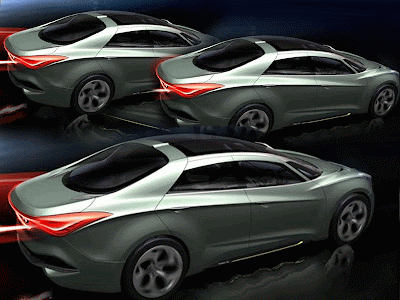
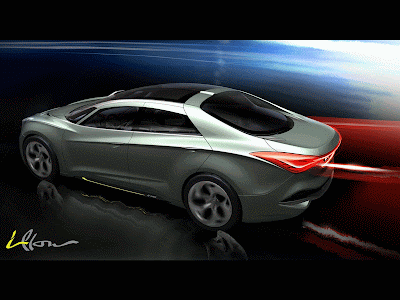
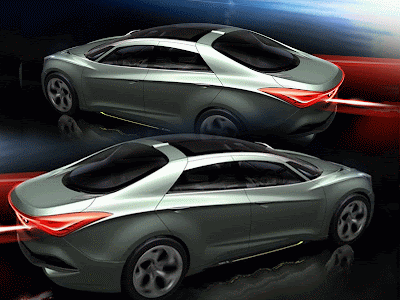
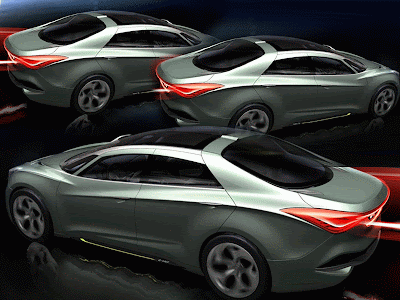
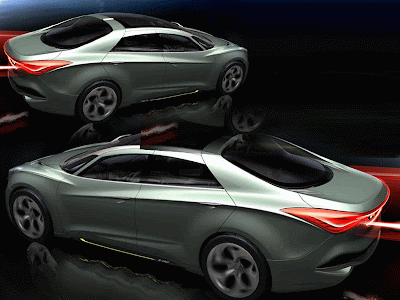
The Geneva Motor Show is quite generous in reveals this year, considering the trend of the automotive industry. Hyundai has just presented its new i-Flow Concept on the catwalk, continuing the company’s statement of developing a the “fluidic design”. As Hyundai continues to branch out into new segments, its European operation, which until recently has focused primarily on small cars, is debuting the Hyundai i-flow concept in Geneva. It's a vision of a coming Hyundai that's expected to do battle in Europe's larger D-segment.
2010 Hyundai i-Flow Concept Diesel-Electric Hybrid Powertrain
The i-flow is the latest concept to wear Hyundai's "fluidic sculpture" design language, and the large D-segment sedan wears it well. Hailing from Hyundai's European Design Headquarters in Russelsheim, Germany, the i-flow incorporates lightweight materials and solar cells from supplier BASF meant to reduce weight and increase energy efficiency.
2010 Hyundai i-Flow Concept Diesel-Electric Hybrid Powertrain
The i-flow is fitted with Hyundai's first-ever diesel hybrid drivetrain, in which a 1.7-liter diesel engine with dual-stage turbocharging is mated to Hyundai's Blue Drive hybrid system and a new six-speed dual-clutch gearbox. As we understand it, the i-flow is a parallel hybrid, allowing it to be powered by its lithium-polymer battery pack and electric motors, the diesel engine or a combination of both. Combined with a slippery 0.25 coefficient of drag, the i-flow will reportedly return 78.4 mpg and emit 0.30 grams of CO2 per mile.
2010 Hyundai i-Flow Concept Diesel-Electric Hybrid Powertrain
The new lines give an elegant avant-garde look, helping in the same time in reducing the CO2 emissions to 85g/km and improving its aerodynamics. In collaboration with chemical company BASF, Hyundai produced its first eco-friendly diesel hybrid powertrain, using high-technologies and next-generation materials. The new i-Flow combines perfectly the concept of a little-big car, as it shows a sporty looks but also provides quite enough space due to the use of a minimalistic design for the seats and center console.
2010 Hyundai i-Flow Concept Diesel-Electric Hybrid Powertrain
The high-tech engine presents the new 1.7-litre engine fitted with 2-stage turbocharging connected to a Lithium Ion-Polymer battery for a more efficient consumption, especially when driven i-flow’s six-speed, dual-clutch transmission. The i-Flow technology is a test bed for new energy harvesting ideas, ranging from flexible solar panel roofing to a thermo-electric generator which uses exhaust heat to produce power. More news of Hyundai’s star cars will be published in advance of the show and will be available on the stand.  The company’s press conference will take place in Hall 1 at 14:15 (CET) on Tuesday 2nd March  (2010).

2010 Hyundai Genesis Sports Car Coupe with SHIFTRONIC to handle the additional torque

2010 Hyundai Genesis Sports Car Coupe

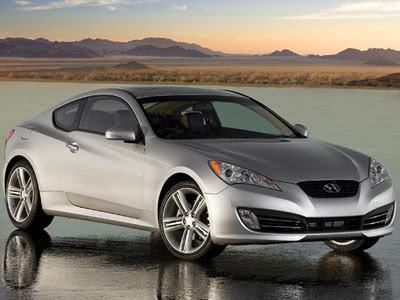
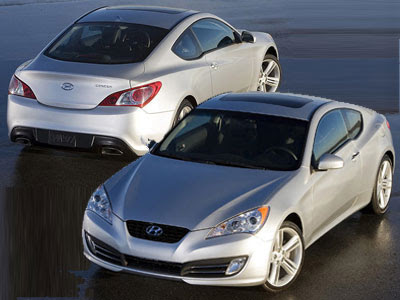
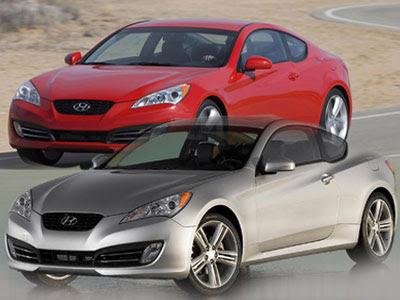
The people at South Korean automaker Hyundai are listening to their customers. The 2010 Hyundai Genesis Coupe, confirmed for production and a release early in 2009, follows the tradition of the 2009 Hyundai Genesis in offering a true high performance rear wheel drive, sporty architecture in an affordable package. The 2010 Genesis Coupe is a purpose-built rear-wheel drive sports coupe featuring two performance-focused engines - a212-horsepower 2.0-liter turbocharged four-cylinder engine and a range-topping all-aluminum 306-horsepower, DOHC 3.8-liter V6 engine.
2010 Hyundai Genesis Sports Car Coupe

Genesis Coupe employs a MacPherson strut dual-link front suspension and a five-link rear suspension setup. Both engines are mated to a standard six-speed manual transmission. The Genesis Coupe 2.0t (2.0-liter 4-cylinder turbo) offers an optional five-speed automatic with SHIFTRONIC® while the 3.8-liter V6 offers a ZF six-speed automatic transmission with SHIFTRONIC to handle the additional torque.
The Genesis Coupe follows the styling tradition set forth by the Hyundai Tiburon, but outdoes that aging Hyundai compact sports car in every way. The Genesis Coupe comes with an available naturally aspirated V6, sure to be a motor to find its way into more of Hyundai's lineup. The high output engine offers 310 horses on premium fuel. Following the introduction earlier this year of the rear-wheel drive Genesis sport sedan, Hyundai Genesis Coupe is Hyundai's most dynamic performance car ever and the second consecutive all-new model introduction from Hyundai appealing directly to the car enthusiast.
2010 Hyundai Genesis Sports Car Coupe

Hyundai Genesis Coupe uses the same flexible rear-wheel drive architecture originally developed for the Genesis sport sedan.
The 2010 Hyundai Genesis Coupe offers Xenon high-intensity discharge (HID) headlights. The advantages of HID headlamps include greater lighting power, daylight-type lighting and reduced power consumption. In addition, the cut lines of the new HID headlights are extremely precise, providing maximum nighttime visibility without distracting other drivers.
All Hyundai Genesis Coupe models feature standard four-channel ABS with Electronic Brake-force Distribution (EBD) to optimize brake performance under various dynamic loading conditions. The system also includes Brake Assist, which provides maximum ABS-level braking force when a panic stop is detected.
2010 Hyundai Genesis Sports Car Coupe

It is nice to see that Hyundai, an automaker currently enjoying growth and a solid reputation for producing mainstream-market cars that last, is making steps toward the sports car market. The styling of the Genesis Coupe is hit or miss, some will love it and others will wonder what Hyundai was thinking. But, with the sports car pedigree to back it up, the Genesis Coupe should be another worldwide hit for Hyundai.
2010 Hyundai Genesis Sports Car Coupe

The Hyundai Genesis Coupe is offered in three trim levels: the stylish and affordable GS, the premium-sport GT featuring the 3.8-liter V6, and the high-performance SE, available with either the 2.0-liter turbocharged four-cylinder engine or the 3.8-liter V6 engine.

2010 Hyundai Sonata i40 Electric Hybrid Concept Car

2010 Hyundai Sonata i40 Electric Hybrid Concept Car

Hyundai
presented the next generation Sonata sedan, which is on the European market would be called i40.
2010 Hyundai Sonata gets a new platform and a different range of engines, which will include a series of turbo diesel “R” and the four-and six-cylinder petrol engines. It is also expected to modify the appearance of 228-strong hybrid that combines 2.0-liter turbo-charged (according to other sources - 2.4-liter) capacity of 30 kilowatt electric motor, lithium-ion batteries, and six-speed automatic transmission.
In the sale of novelty will appear early next year. According to some foreign publications in Europe, first to the market can go touring Hyundai i40, then hatchback, sedan and the hybrid version.

2009 Hyundai Elantra Sedan to Debut in China

At this year’s China Auto Show that takes place in Beijing from April 20 to 28, Hyundai will present the facelifted version of its Elantra sedan. Compared to the U.S. market model, the Chinese Elantra features a completely restyled front end inspired from the i30 / Elantra Touring models while changes in the rear-end include the new bumper, taillights and the slightly redesigned trunk. Although it sounds quite logical for these styling changes to pass onto the North American market Elantra, Hyundai has not made any announcement of the kind. –More images after the jump


2009 Hyundai Coupe – Tiburon TSIII Limited Edition

Hyundai has announced the introduction of a new limited edition model of its Coupe (Tiburon in the U.S.) for the UK market. Called the “TSIII” -don’t ask why, we have no idea- the special edition version is based on the 141Hp 2.0-liter model and it features extra styling enhancements, an Eibach sport springs kit and exclusive colour options.

In particular, four paint colour options of Stone Black, Rose Red, Crystal White or Carbon Grey are available. Crystal White and Rose Red have never been offered on the Coupe before and are exclusively available on the TSIII in limited numbers. To complement and contrast with these colours, Hyundai has equipped the Coupe TSIII with new 17” alloy wheels finished in anthracite. Moreover, the Korean carmaker fitted the Coupe with new quad exhaust pipes that deliver a sportier engine note, while there’s also a larger boot spoiler with integral brake light. –Continued after the jump

Inside the cabin, the Coupe TSIII features leather sports seats and matching quilted door trims, chrome sill guards with a TSIII logo, metal trimmed pedals and footrest. As for standard equipment, the TSIII comes with air conditioning with climate control, heated front seats and cruise control along with iPod compatible stereo and metal-look finishes on the steering wheel, centre console and air vents.

The Coupe TSIII is already available for order at Hyundai dealerships in the UK with prices starting at £19,595 –about €24,800 or $38,900.


Brand New Hyundai Genesis Sedans Get a Bit Too Intimate...

Yes, accidents can happen to anyone, anytime and anywhere. Still, and even though we’re not exactly sure how the sliver 2009 Hyundai Genesis Sedan fell off from the transport truck onto its blue-colored sibling somewhere in Korea, we certainly wouldn’t want to be in the driver’s shoes when he called in to report the incident… -More images of the accident after the jump


Pics: Zeanon

Video: Hyundai’s "Drifty" Genesis Coupe NY Show Presentation


More often than not, media presentations are one of the most tedious things that can happen to a person. Luckily, that wasn’t the case with Hyundai and its 2009 Genesis Coupe presentation at the New York Show opening. Check out the video and you’ll see exactly what we mean.

Video: 2009 Hyundai Genesis Coupe

Available with either a 212 Hp 2.0-liter turbocharged 4-cylinder or a 306 Hp 3.8-liter V6 engine, Hyundai’s affordable rear-wheel-drive coupe was officially revealed today at the New York Auto Show (see pics and details here). According to Hyundai, the Couple will arrive in North American dealerships in the spring of 2009. Now here’s a phrase we haven’t heard for a while; hopefully, Hyundai will also consider bringing the Genesis Coupe to Europe-Check out the official video right after the jump

Hyundai Genesis Coupe Official Details: With 300 Hp 3.8 V6 & 212 Hp 2.0L Turbo Engines

Hyundai’s first ever rear-wheel-drive coupe was officially unveiled today at the New York Auto Show. We’ve already seen the official images of the coupe, and while some might (rightfully) see design cues carried over from other makes, we find the Genesis Coupe’s overall styling attractable. Based on the same rear-wheel-drive platform as the Genesis Sedan, the Korean automaker has high hopes for the Genesis Coupe as it aims to market it not only against the Ford Mustang, but also as an affordable alternative to luxury cars like the Infiniti G37 and the BMW 3-Series Coupe.

While American carmakers are still considering the use of 4-cylinder units on their sport coupes (read what Lutz had to say about the 4-cylinder Camaro here), Hyundai will offer the Genesis Coupe from the beginning with a 2.0-liter turbocharged 4-cylinder engine. This unit generates an estimated 212 Hp (223 Hp using premium fuel) and 217 lb.-ft. of torque. It can be combined with a 6-speed manual transmission or a 5-speed auto.

The most powerful version of the Genesis Coupe –unless Hyundai surprises us with a V8 unit in the future, is powered by 3.8-liter V6 engine delivering 306 Hp (310 Hp using premium fuel) and 263 lb.-ft. of torque. This engine will launch the Genesis Coupe from 0 to 60 mph in under six seconds according to Hyundai. The V6 is matted to a 6-speed manual gearbox or optionally, a 6-speed auto. –Details and image gallery after the jump


Press Release:

ALL-NEW HYUNDAI GENESIS COUPE: A NEW BENCHMARK FOR ATTAINABLE 300-HORSEPOWER SPORT COUPES

New York, 03/19/2008

Hyundai unveiled Genesis Coupe, the new benchmark for attainable 300-horsepower sport coupes, during a press conference at the New York International Auto Show today. The 2010 Genesis Coupe is a purpose-built rear-wheel drive sport coupe featuring two performance-focused engines – a 212-horsepower (est.), 2.0-liter turbocharged four-cylinder engine and a range-topping all-aluminum, 306-horsepower (est.), DOHC 3.8-liter V6 engine. Genesis Coupe is scheduled to join the Hyundai lineup in the spring of 2009.

GENESIS COUPE HIGHLIGHTS
• Hyundai’s second rear-wheel drive performance car
• 306 horsepower (est.)from enhanced 3.8-liter V6 from Genesis sedan
• Std. 212 horsepower (est.) turbocharged, intercooled inline four cylinder
• Genesis Coupe arrives in the spring of 2009 as a 2010 model

Following the introduction earlier this year of the rear-wheel drive Genesis sport sedan, Genesis Coupe is Hyundai’s most dynamic performance car ever and the second consecutive all-new model introduction from Hyundai appealing directly to the car enthusiast. Genesis Coupe uses the same flexible rear-wheel drive architecture originally developed for the Genesis sport sedan.

“We think our entry-level Genesis Coupe 2.0t, with its unique combination of rear-wheel drive and four-cylinder turbo power, offers an intriguing alternative to existing front-wheel drive sport coupes,” said John Krafcik, vice president, product development and strategic planning, Hyundai Motor America. “The 3.8-liter version of Genesis Coupe takes driving to an even higher level, rivaling the capability of premium-performance coupes like the Infiniti G37.”

DESIGN PROCESS

2010 Genesis Coupe Genesis Coupe was shown as a concept at the 2007 Los Angeles Auto Show and its transformation from concept to production reveals that its signature design features have emerged intact.

“The mission for Genesis Coupe was to create a pure performance car with a design that would capture the imagination of hardcore automotive enthusiasts,” said Joel Piaskowski, chief designer at the Hyundai Design Center in Irvine, Calif. “With its aggressive look from just about any angle, I think we have been able to do that.”

Genesis Coupe’s arching roofline and tapering greenhouse highlight the exterior profile and emphasize the car’s broad shoulders and wide stance. The Genesis Coupe’s rocker panels are drawn close to the ground making the bodysides extra thick and the daylight opening thin, allowing the wheels to be slammed up into bulging fenders. To complete the aggressive sports car look, the depth between the fenders and the greenhouse has been maximized.

Large openings in the front fascia allow for better engine breathing. The dual exhaust tips integrated into the rear fascia with surrounding blackout repeat the design theme of the front fascia graphic.

Genesis Coupe rides on standard 18-inch alloy wheels or optional 19-inch wheels, both delivering a bold stance and aggressive handling.

INTERIOR DESIGN

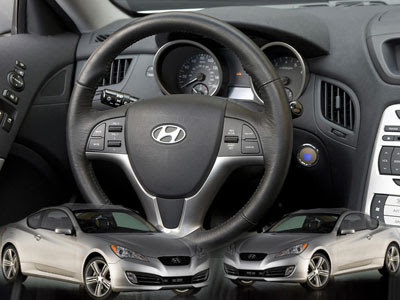
In keeping with its mission to be the most exciting, attainable sport coupe on the road, the Genesis Coupe boasts a cockpit designed to enhance the driving experience. An information display screen features an outside temperature reading and audio system information. Analog gauges include a large speedometer and tachometer positioned so the driver can immediately access critical driving information. The instrument cluster features Hyundai’s signature blue gauge illumination.

Bucket front seats with large side bolsters offer excellent lateral support for enthusiastic driving. High-quality seating surfaces range from full black fabric on the Genesis Coupe GS and GT, to optional full black or brown leather on the GT, to red cloth inserts with black leather bolsters on the SE.

Among the other refinements are an Infinity audio system and two-stage front seat warmers. Genesis Coupe also offers the convenience of a Smart Key and push-button starter.

REAR-WHEEL-DRIVE ARCHITECTURE

Genesis Coupe’s body shell is rich in ultra-high-tensile steel. Genesis Coupe is lighter than the Infiniti G37, and its chassis is also 24 percent stiffer in bending rigidity than the BMW E46 M3. Rear-wheel drive provides a 55:45 front/rear weight distribution.

POWERTRAINS

wo engines infuse Genesis Coupe with performance. The 3.8-liter Lambda DOHC V6 engine delivers an estimated 306 horsepower (310 horsepower using premium fuel) and 263 lb.-ft. of torque on regular unleaded. This engine will launch the Genesis Coupe from 0 to 60 miles per hour in under six seconds. To maximize the power band, the 3.8-liter engine utilizes Continuously Variable Valve Timing (CVVT) on intake cam shafts and a new Variable Intake System (VIS) that helps cylinders breathe efficiently at both low and high RPM. The better breathing results in outstanding off-the-line acceleration and passing performance, and remarkable fuel efficiency. The V6 engine uses an alloy block and cylinder heads for lighter weight and thermal efficiency, and features timing chains with no scheduled maintenance.

The turbocharged, intercooled 2.0-liter DOHC inline four-cylinder benefits from CVVT on both the intake and exhaust camshafts. The 2.0-liter turbo generates an estimated 212 horsepower (223 horsepower using premium fuel) and 217 lb.-ft. of torque. It also features a cast-aluminum cylinder block and cylinder head. Both engines feature a free flowing dual cat-back exhaust and an available limited slip differential to put the power to the ground.

SPORT-TUNED SUSPENSION

Genesis Coupe employs a MacPherson strut dual-link front suspension and a five-link rear suspension setup. The front suspension is mounted to the body via a solid subframe which is lighter and stronger than a multi-piece component would be. To help reduce body roll and tune the Genesis Coupe’s at-the-limit handling for maximum predictability, 23-mm diameter front and 18-mm diameter rear stabilizer bars are used.

While all Genesis Coupe models offer a fun and sporty driving experience, the high-performance Genesis Coupe SE is a most willing partner for the true enthusiast. The SE’s track-tuned sport suspension features a stiffer front spring rate, stiffer rear spring rate and unique shock valving. Genesis Coupe SE delivers an increase in roll control over the GS. Superb structural rigidity sets the foundation for precisely-tuned handling performance in all Genesis Coupes.

STEERING

Hydraulic rack-and-pinion steering with a quick ratio gear delivers both linearity and agility. The steering is also engine-RPM sensing.

TRANSMISSIONS

Both engines are mated to a standard six-speed manual transmission. The Genesis Coupe 2.0t offers an optional five-speed automatic with SHIFTRONIC® while the 3.8-liter V6 offers a ZF six-speed automatic transmission with SHIFTRONIC to handle the additional torque.

Drivers can access the SHIFTRONIC® feature by moving the gear selector into a separate gate. Pushing the selector forward or pulling it rearward will shift the transmission up or down sequentially, adding to driver control. A clear LCD readout on the instrument panel shows the gear that’s in use.

HIGH PERFORMANCE BRAKING SYSTEMS

Brembo four-piston calipers clamp down on 13.4-inch front brake rotors and 13-inch rear rotors on SE models. All other models get substantial 12.6-inch front ventilated rotors and 12.4-inch rotors in the rear with floating single piston calipers.

INNOVATIVE TECHNOLOGIES

The 2010 Genesis Coupe offers Xenon high-intensity discharge (HID) headlights. The advantages of HID headlamps include greater lighting power, daylight-type lighting and reduced power consumption. In addition, the cut lines of the new HID headlights are extremely precise, providing maximum nighttime visibility without distracting other drivers.

Music lovers will welcome the 2010 Genesis Coupe’s standard auxiliary input jacks (3.5 mm mini-jack and USB input) to accommodate and charge audio devices such as iPods®. When an iPod or flash drive is connected through the USB port, located in the center storage compartment, not only does it play music through the vehicle’s audio system, but it also charges the iPod and allows the driver to access tracks with the steering wheel audio controls. This system also allows both driver and passengers to easily view song/artist/title information and control the music from the audio head unit rather than only the iPod itself.

SEGMENT-LEADING SAFETY TECHNOLOGIES

In keeping with Hyundai’s focus on offering segment-leading standard safety technologies across its lineup, the 2010 Genesis Coupe includes a wide range of both active and passive safety features. Standard safety technology includes driver and front passenger advanced frontal airbags, along with front seat-mounted side airbags, side air curtains and active front head restraints.

Genesis Coupe has strong unibody construction, along with front and rear crumple zones, bodyside reinforcements, and five-mph energy-absorbing bumpers. The hood also includes buckling creases and safety stops.

The front seatbelts have pretensioners and force limiters, and the rear seats feature LATCH (Lower Anchors and Tethers for Children), which make affixing child safety seats easier.

All Genesis Coupe models feature standard four-channel ABS with Electronic Brake-force Distribution (EBD) to optimize brake performance under various dynamic loading conditions. The system also includes Brake Assist, which provides maximum ABS-level braking force when a panic stop is detected.

Electronic Stability Control (ESC), one of the industry’s most effective life-saving technologies, is standard in all Genesis Coupes. Insurance Institute for Highway Safety (IIHS) studies suggest vehicles equipped with ESC experience 56 percent fewer fatalities in single-vehicle crashes.

THREE DISTINCT TRIM LEVELS

The Genesis Coupe is offered in three trim levels: the stylish and affordable GS, the premium-sport GT featuring the 3.8-liter V6, and the high-performance SE, available with either the 2.0-liter turbocharged four-cylinder engine or the 3.8-liter V6 engine.

GENESIS COUPE GS (Preliminary packaging subject to change)

Key Standard Equipment:
• 2.0-liter turbocharged, intercooled four-cylinder engine
• Electronic Stability Control
• Traction Control System
• ABS
• Tire Pressure Monitoring System
• Front, side, side air curtain air bags
• Active front head restraints
• Manual A/C
• Keyless entry
• Power windows, door locks, and mirrors
• AM/FM/XM/CD Player/USB/iPod connectivity
• Steering wheel audio controls
• Cruise control
• Vanity mirror illumination
• Bluetooth

GENESIS COUPE GT (Preliminary packaging subject to change)

GS equipment Plus:
• 3.8-liter DOHC V6
• Leather steering wheel / Shift knob
• Metalgrain /chrome interior accents
• Automatic temperature control
• Fog lamps
• Premium door sill plates
• Trip computer
• Chrome front fascia accents
• Auto light control

GENESIS COUPE SE (Preliminary packaging subject to change)

Unique SE equipment:
• 2.0-liter turbocharged four-cylinder or 3.8-liter DOHC V6
• HID headlights
• Aluminum pedals
• Manual A/C
• 19-inch alloy wheels
• High performance Bridgestone Potenza RE050A summer tires
• Brembo braking system with monobloc four-piston calipers
• SE track-tuned suspension / front strut brace
• Limited-slip differential
• Black leather bolsters / red cloth insert seats
• Rear spoiler
• Aero wiper blades