Showing posts with label Fiat. Show all posts

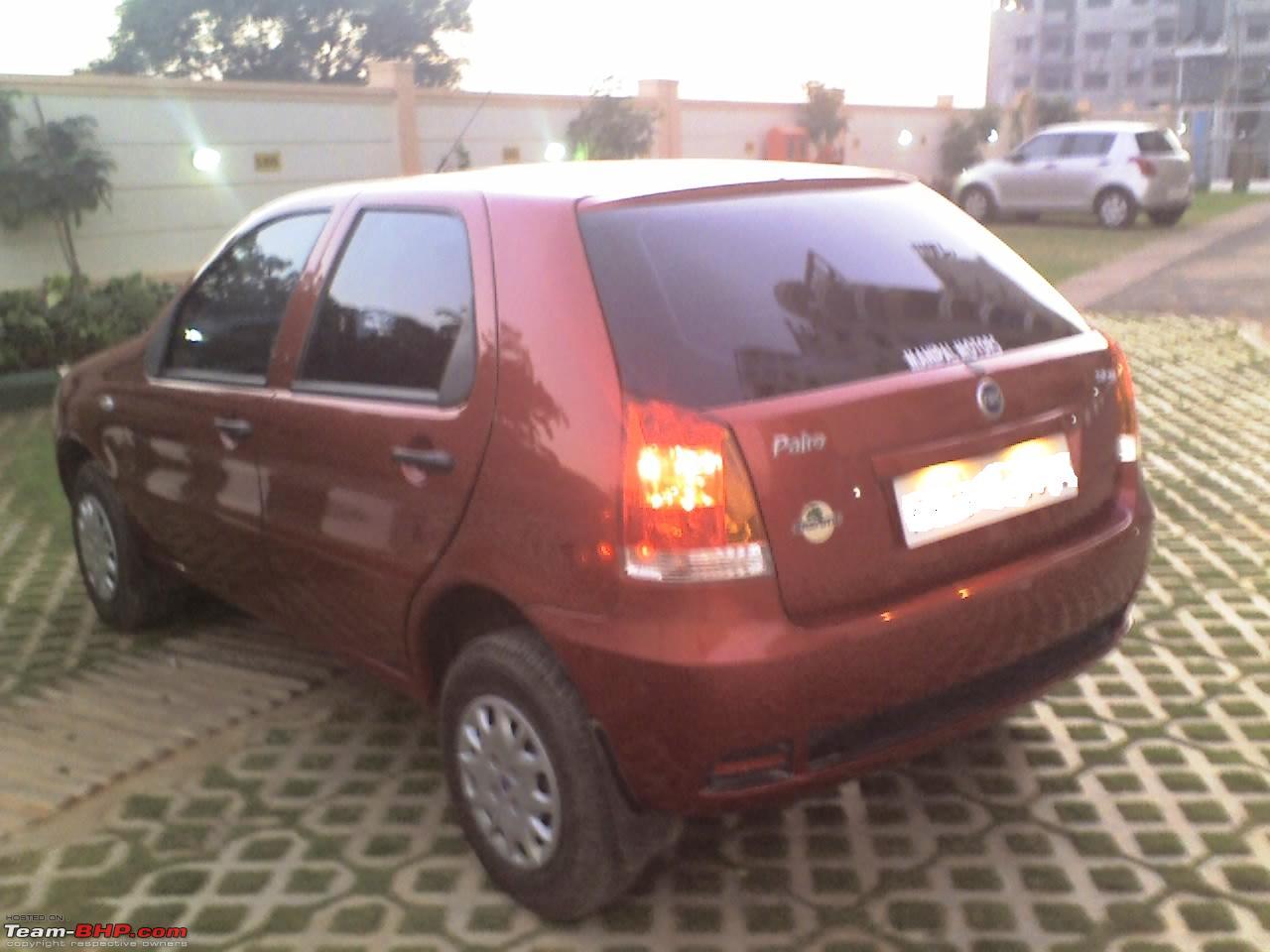
New Cars From Fiat Palio Stile Car Review and features with prices

New Cars From Fiat Palio Stile Car Review and features with prices
Now new upcoming Fiat Palio Stile is a B-segment hatchback car produced and distributed by Fiat Motors and Tata Motors in India.
The world-renowned Automobile designer Giorgetto Giugiaro designs Fiat Palio Stile. It has a good combination of attractive looks and smart technology.

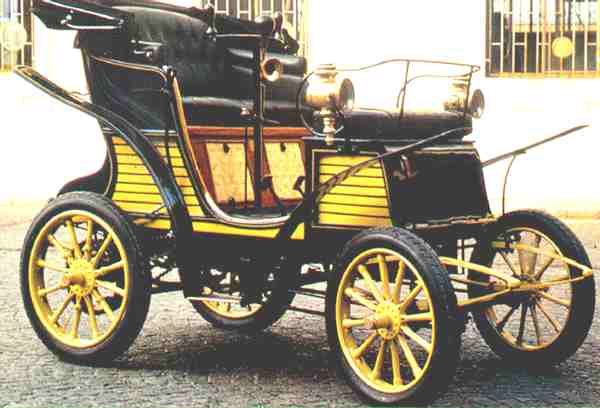
1908 Fiat 20 30 Hp prices with previews specification

1908 Fiat 20 30 Hp prices with previews specification
Upcoming 2012 lotus Car News: http://car-wheelx.blogspot.com/search/label/lotus%20cars
Fiat 1989Fiat Coupe 20V Turbo GT28RS1908 Fiat 15-25 HP BrevettiIn the early part of the 20th

2011 hamann fiat 500 sportivo cars reivew and prices specification

2011 hamann fiat 500 sportivo cars reivew and prices specification
2008 Hamann Fiat 500 Sportivo 90 hp. Sponsored Links, Friday, July 16, 2008 Hamann Fiat 500 Sportivo - Rear ViewHamann Fiat 500 Sportivo 2008-Front Viewused 2008 Hamann Fiat 500 Sportivo2008 Hamann Fiat 500 Sportivo - Photo galleryused 2008 Hamann Fiat 500 Sportivo

Fiat Cars


Fiat Cars: Fiat Linea, Fiat Barchetta, Fiat Bravo, Fiat 500, Fiat Grande Punto, Fiat Panda.

Fiat Super Sport Car Grande Punto Abarth

The new Abarth Fiat Grande Punto SuperSport will have its premiere this week at the Frankfurt Auto Show. A special Grande Punto Abarth “SuperSport” is making the scene at Geneva, garbed in Airfield Gray paintwork – the same color sported by the Scorpion’s historic racecars, and, as the story has it, taken from the planes based next to the brand’s original headquarters – enlivened by a racing-inspired livery.
Equipped with a 16-valve 1.4 liter engine pumped up to deliver 180 horsepower, with a wrenching 270 Nm peak torque at speeds as low as 3000 revs, the Grande Punto Abarth “SuperSport” racing version hits a top speed of 215 km/h and accelerates from 0 to 100 km/h in only 7.5 seconds. In addition, a variable backpressure dual-mode exhaust system enhances engine sound, producing a distinctive throaty roar over 4000 rpm. With performance features like these, there can be no doubt that this is a car whose whole heart and soul is in racing.
For its interiors, the car gets leather racing seats and a Magneti Marelli designed sat-nav system. Providing telemetry, the sat-nav display can show engine revs, vehicle speed and the gear engaged. By setting it to “Track” mode, the screen displays its position on the track if the car is on a circuit in the SD card’s memory. These telemetry results can be downloaded later.
The third function – Configuration – makes it possible to store telemetric data for a route and associate them with a personalized session identified by the driver’s name, circuit and date. Stored information can be easily retrieved and analyzed later with the fourth, Analysis, function.

2011 Fiat Sport Car Abarth 500C Convertible

2011 Fiat Sport Car Abarth 500C Convertible
Fiat has unveiled the exciting new Abarth 500C Convertible, the new Abarth 500C will go on sale first in Italy and shortly after in the rest of Europe. The 2011 Fiat 500C Abarth comes with a new body and exterior expanded by an elegant two-tone color scheme. In addition to enhancing the aggressive appearance of the 500C, the spoiler effectively boosts CZ loading and creates a smoother air flow.
The roof slides down while the pillars and structural roof line remains, providing a stronger chassis than a traditional soft top. An innovative spoiler slides down with the soft top. Power is at 140 hp which takes the car to 60 mph in 8.1 seconds.
A side from the male population looking for a relatively affordable cabrio with some punch, Fiat claims that the new open-topped car was also made to appeal to women customers "who seek design and elegance but also appreciate the performance of a true sports car."
The Abarth Fiat 500C is powered by a 1.4 16v Turbo T-Jet engine developing 140bhp that can take the small open top from 0 to 62 mph in 8.1 seconds. The top speed of the Abarth Fiat 500C is rated at 127mph. The car has an official fuel consumption of 43mpg.
In detail, the engine is a 1368 cc 4 cylinder 16 valve unit (turbo charged with a fixed geometry IHI RHF3-P turbocharger) that delivers exhilarating performance. Top speed is 205 km/h while acceleration from 0 to 100 km/h takes place in just 8.1 seconds. This is partly achieved by the overboost function, activated by the Sport button that modulates control unit mapping and turbo pressure in addition to load on the steering wheel. Yet this typically Abarth performance comes with very frugal fuel consumption: 6.5 l/100 km over a combined cycle.

Video: “Every Fiat is 500% Fiat” TV Ad

Fiat is planning to cash in the new 500’s success in everyway it can think of. Take the Italian company’s newest pan-European advertising campaign called “Every Fiat is 500% Fiat” for example. The TV advert that was created by the Turin office of Leo Burnett Italia Group attempts to underline the way every Fiat car incorporates all the values that have contributed to the (sales) success of the new 500.

Filmed on a Moroccan salt lake on the border with Algeria, the video clip opens with a few Fiat models on a drive through a sun-baked desert. As the video progresses, the number of cars increases until they form a gigantic outline of a Fiat 500. -See the video after the jump


Fiat Readying Petrol & Diesel-Electric Hybrid Cars and Vans

The Fiat Group that includes the Alfa Romeo, Fiat and Lancia brands is working on a new petrol and diesel-electric hybrid system that is set to enter production by 2011. Alfredo Altavilla, CEO of Fiat Powertrain Technologies, told ANE, "We are still in the research phase and, if everything proceeds as expected, we could begin production within three years."

Just like Toyota’s hybrid powertrains, Fiat’s system will be able to power the vehicle for a short distance using only the electric energy stored in the batteries. According to ANE, Fiat’s current plans include a hybrid system based on a new 2-cylinder, 0.9-liter gasoline engine that mates an electric motor/generator to a dual-clutch transmission. This powertrain will be used on Fiat and Lancia minicars including the new 500. -Continued

Another hybrid powertrain that Fiat is working in is a four-cylinder, 2.3-liter diesel engine combined with an electric motor/generator and an automated manual transmission. This unit will be used on the Fiat Group’s light commercial vehicles.

Via: ANE (sub. Req.)

BMW Considering Selling Engines to General Motors and Other Carmakers

Could it be that your next Chevrolet sedan be fitted with a Bavarian straight-six engine? Well, while we don’t think that BMW is thinking about its top-end 6-cylinder, V8 and V12 engine series fact is that Friedrich Eichiner, BMW’s board member for corporate and brand development, told Automotive News that the German carmaker will decide by the end of the year if it will sell various engines and components to General Motors and other rival automakers. –Continued after the jump

When asked by AN’s reporters if BMW is talking to GM, Daimler and Fiat about supplying engines, Eichiner said, "We are talking with those companies you mentioned.” Apparently, the Bavarian carmaker is in talks about its PSA Peugeot Citroen co-developed 4-cylinder engines that equip the MINI along with its 4-cylinder diesel engine range. According to reports, BMW CEO Norbert Reithofer Selling engines and other components to other automakers is part of BMW CEO Norbert Reithofer's Number One strategic plan to boost the carmaker's profitability

Via: ANE , Picture: Carscoop

Fiat 500 Art Car Sells For $85,000!

Call me incult, but if I saw this on my driveway I’d probably be practicing my French on the next-door neighbor’s kids. But someone actually paid a hefty $85,000 or £42,000 to obtained this car last Saturday (13 Oct.) during the Contemporary Art Auction at the Phillips de Pury & Company saleroom in London. The painting is the work of English artist, Tracey Emin, who’s planning to paint three other 500s (click here), one before the end of the year and two in 2008. All of them will be auctioned. The good news is that proceeds from the sales will go to the artist’s chosen charity PEAS, which is raising funds for a school library in Uganda.

Video: Fifth Gear Tests The New Fiat 500


The blokes at UK’s Fifth Gear TV show got their hands on Fiat’s new 500 taking it for a first drive. As you can see in the video, 5th Gear’s Tom Ford was more than impressed with the Italian rival to BMW’s MINI in the premium mini segment. Ford concludes that the 500 is a well made, practical and enjoyable mini with tons of character that may not be as sharp to drive as the MINI but it’s cheaper,
almost as spacious and at least as much of a pleasure to sit in.

Via: Autoblog.it

2008 Fiat Fiorino LCV

Fiat took the wraps off the all-new Fiorino LCV (Light Commercial Vehicle) that is aimed towards small-businesses in need of an agile and compact van. Developed in cooperation with the PSA Citroen-Peugeot Group, the compact LCV measures in at 3.86 m in length (150.8-inches) and according to Fiat, it features a 1,5 m (59.0-inches) long cargo bed. The Fiorino is set to go on sale in Italy this December with the rest of the Europe following in early 2008. -Press release after the jump

Via: Autoblog.it , Source: Fiat

Translated Press Release

Fiat Professional introduces the new Fiorino, a new compact, outside large van “within”

Fiat Professional has yesterday introduced the new Fiorino to beyond 600 Italian concessionaires. The convention it has been carried out near the Auditorium of the Ingot to Turin. Next 4 October, the new Fiorino will be introduced to the press to the Transpotec of Milan, the international Hall of the Technologies of the Transports on Road, the Intermodal Services and the Logistics.

Heir of a succeeding model of large, the new Fiorino represents, thanks to the compactness of the external dimensions, to the performances works them and to one modern style and symbol, a completely unknown offer on the market of the small vans.

Developed jointly from Fiat and PSA Peugeot Citroën and realized in collaboration with Tofas, the Fiorino is along in fact single 3,86 meters but it offers inner dimensions optimized (2,5 m3 of volumetria and 1,5 m of inner length) estendibili to 2,8 m3 and to 2,5 m, thanks to the presence of a abbattibile fleeting seat.

Accessibility to the cargo bay is facilitated from flowing lateral doors and posterior clapper doors of great dimensions and from one low cargo threshold (53 cm).

Agile in the traffic and easy to park it offers it appeal to of guide and standard of emergency like one car.

The nside, luminous spazioso and, are work them, ergonomic and comfortable also for an intense one I use professional. Equipments which the power steering, the ABS and the air-bag for leading, are present of series. They are also available, at call, numerous other devices typical you of advanced segments, which the parking sensors, the cetralized closing of the nside separated from the cargo bay, etc

The Fiorino above all characterizes for operating costs many contents, shining, reliable, efficient thanks to motorizations benzine and diesels engine in terms of saving of fuel and rispettose of the atmosphere (4,5 l/100 km of consumption in the cycle arranged and 119 g/km of CO2 for the diesel motor).

Fiat Fiorino will be in sale beginning from beginning December in Italy and subsequently it will be commercialized abroad.

Fiat Nuovo 500 Bi-Colore By Aznom

Can you imagine how many tuners will present customization programmes for the “nuovo” 500 once Fiat begins selling it in all of Europe early next year? We’ve already seen a dozen or so propositions and the 500 is (or rather was since 2007’s production is sold out) available only in Italy and France! This one is the work of Italian custom shop, Aznom who picked out a “bumblebee” paintjob theme for the exterior along with 17-inch alloy wheels. Inside, Aznom offers three grades of customization –depending on the depth of your wallet, covering the cabin with wood inserts, bi-colour seats etc. -Follow the jump for more pictures and the translated press release

Via: Autoblog.it , Source: Aznom

Translated Press Release

The rework of the 500 is born from the will to improve and to personalize a icona, sign of the Italian rebirth, the will to change and to render on measure something created one for all. One new challenge for Aznom, only owner of the brand in the field automotive, not only on base 500, but for whichever other your desire on two and four wheels. For our realizations we have established a partnership with Giovanni Novello, of the Nowa Group, whose family is engaged sin from years `50 in the preparation, numerous realization and cure of specially built. The group is distinguished also in the field of the restorations and the handicraft personalizzazioni.

500 Fiat ricarrozzata Topolino by hand from Walter Novello, father of Giovanni, in 1949. In origin it was a giardinetta in wood, after the transformation it it has been lengthened the step and elaborated the motor, and rifared completely the auto body with inner and colors it personalizes to you.

Our first realization on base 500 is been born with the scope to experience new materials, new colors and to risk new cromatismi in order to stimulate the fantasy and the estro of our customers. The plancia totally it is personalized covered from an eccentric essence of wood that donates a touch of originality for who does not want to conform to the aesthetic usuals canoni.

The outside of the 500 by Aznom is bicolored, the particular one of the roof and of the small mirrors pearly cangiante is painted with one ocher tonality, in perfect contrast with the black one of the inferior part.

The inner ones are completely are covered in bicolored skin. Sitting and back are rifiniti to cannelloni style years' 60. The brown and the ocher yellow are alternated wise between several the sitting for giving a sense of elegant mobility to all the nside. Perfect frame is the alcantara that it covers the sky and mounting, without to omit the fins parasol alternated in skin brown and alcantara. Specchiatevi in the lusso.

The circles in alloy from 16 inches of series have been replaced with of the 17 inches in ultralight alloy multirace Mak Passenger XLR with pneumati specific Yokohama “Parada”, thanks to partnership with RS & TA to us the Yokohama and Mak.

Specials on this version: key with same essence of wood used for the plancia, ag in skin with the inner colors of and the manici ones with the same lignea essence of the plancia, trousse for tools in skin with the colors of the inner ones. A singular particularitity of this version 500 is an exclusive device for the sbloccaggio of the door fleeting side through a hidden appropriate push-button in the dashboard. This device was mounted in origin on 130 Fiat Coupè in order to facilitate the climb to edge of the getlteman. We have likeably renamed it “push-button gallant”, an unavailable accessory vintage and. The galanteria returns fashionable…

For the fortunate owners the course of sure guide will be the opportunity to carry out to the special price of 400 € trackznom.

The 500 by Aznom in three declinations…
Aznom redefines style and quality creating with its partner a chosen width of personalizzazioni; in this case we have reassumed in three adjectives, the three ways to be Aznom.

“Amiable” version
External Selleria in skin, particular on ink to your choice
beginning from 4500€
time realization 1 month approximately

“Intriguing” version
Selleria and particular in skin (panels door ant. post. , change and brake by hand) bicolored Auto body, plancia personalizzabile.
beginning from 6500€
time of realization 1 and half approximately

Version “Seducente”
Covering total in skin, bicolored auto body or special color, plancia in valuable materials, tappetini personalizes and vain baggages to you.
Beginning from 8500 €
Time of realization 1 and half months approximately

The prices can vary based on the choice of the skin and valuable materials to use

Fiat Group Reveals Fiat, Alfa & Lancia Design Studies

Fiat Group revealed details and pictures of the winning studies in the “Design the Italian Way” competition which was launched on November 30, 2006. In all, 200 students of 12 different nationalities took part in the competition. The design students were divided into three groups (Alfa Romeo, Lancia & Fiat) and in total they presented 100 projects of which 24 made it to the final stage. On September 20, six projects were singled out by the jury comprising experts from the design field, fashion world, architects and specialized journalists. -Continued after the jump

For the Fiat brand students were briefed to create a concept for the future Panda and a family of models around the Grande Punto. In regards of Lancia, participants were asked to develop two different concepts belonging to the same product family: a compact mainly for town use and a versatile, small-size MPV. Finally, those who chosen for the Alfa group, were told to produce three concepts: a 'large', versatile sports model; a flagship model and a 'small', zippy car, fun to drive and with an affordable price.

Press Release: Awards made in the Fiat Group Style Centre's “Design the Italian Way” competition

The closing evening of the “Design the Italian Way” competition took place on September 20, 2007 in the new Fiat Group Automobiles' Style Centre headquarters (Officina 83). Participants in this competition launched on November 30, 2006 came from eight of the world's leading design schools: Turin's European Institute of Design, the Design Faculty of Milan Polytechnic, Detroit College for Creative Studies, Coventry University of Art and Design, Tokyo Communications Arts, Moscow's Stroganov State University, Ahmedebad National Institute of Design (India) and the Umea University Institute of Design (Sweden).

The idea for this award was a joint effort that involved not only Style Centre designers but also the Fiat, Lancia and Alfa Romeo brands and their respective Product, Engineering & Design and Human Resources management teams. The basic features to be incorporated in projects developed for each of the three brands were defined by the CEOs of Fiat, Lancia and Alfa Romeo, namely, Luca De Meo, Olivier François and Antonio Baravalle.

The 200 students, of 12 different nationalities, who participated in the “Design the Italian Way” competition were divided into three groups – one for each brand – and in total they presented 100 projects. A winner for each brand was then chosen from designs submitted by each of the participating schools. In the majority of cases projects were the work of a 2/3-student team who were represented by one member at the final evening. All of them will participate in a Fiat Group Automobiles programme providing hands-on experience, thanks to a study grant covering five months in the Fiat, Lancia and Alfa Romeo Style Centres. A training period that will specifically focus on developing Product Communication and Style Development skills.

During the closing evening the jury comprising experts from the design field, fashion world, architects and specialised journalists singled out six works from the 24 project finalists that were given special mentions. The awards covered the Best Italian Design for the Fiat, Lancia and Alfa Romeo brands; Best Innovative Material Use; Best Future Vision; Best Overall Communication.

For the Fiat brand the briefing students received was to develop a concept for the future Panda and to create a family of models around the Grande Punto. They were also told to bear in mind items and products associated with these two cars that can create a new, strong and distinctive family feeling based on smiles, a friendly feeling, simplicity and dynamism, which are the hallmarks of this brand.

As regards Lancia, students were asked to reinterpret the brand's concepts of refinement, glamour and technology in an innovative key, developing two different concepts belonging to the same product family: a compact mainly for town use and a versatile, small-size MPV. In this case, there was to be a special focus on interiors to ensure maximum possible personalisation in line with current fashion trends.

There were three concepts for Alfa Romeo: a 'large', versatile sports model; a flagship incorporating a new stylistic approach while still meeting the expectations of traditional customers; a 'small', zippy car, fun to drive and with an affordable price. As for interiors, the request was hi-tech devices, shapes and content. Sporty style and emotions are what differentiate the style of this brand.

On the occasion of the final evening of “Design then Italian Way”, held in the new premises of the Fiat Group Automobiles' Style Centre, three separate areas were organised – one for each brand – with an exhibition of works by the 24 finalists. Jury members were able to talk with the young designers, review their projects and decide which deserved special mention. And so after the gala dinner there was an official prize-giving for the 24 winning entries followed by awards for the projects selected for a special mention.

Best Italian Design for the Fiat brand: Fiat Panda – Danilo Tosetti, Luca Seren Gay, Enrico Vercelli – Istituto Europeo di Design, Torino (Italy)

Best Italian Design for the Lancia brand: Lancia Aemila – Naoya Tsukamoto, Tatsuya Yamamoto, Chen Yi Kai – Tokyo Communication Arts (Japan)

Best Italian Design for the Alfa Romeo brand, ex aequo: Alfa Romeo – Mahan Ghose – National Institute of Design (India) and Alfa Romeo Area – Carmelo Giannone – Istituto Europeo di Design (Italy).

Best Innovative Material Use: Panda Splash – Federico Weber, Danilo Mangini – Politecnico di Milano (Italy)

Best Future Vision: Fiat Panda – Danilo Tosetti, Luca Seren Gay, Enrico Vercelli – Istituto Europeo di Design, Torino (Italy)

Best Overall Communication: Fiat Panda – Danilo Tosetti, Luca Seren Gay, Enrico Vercelli – Istituto Europeo di Design (Italy)

Young designers from all over the world

Here are the impressions of some of the designers at the Fiat Group Automobiles' Style Centre who were personally involved in organising this venture. Impressions as to how the various schools participated in the “Design the Italian Way” competition and came up with winning projects and how Italian style has been interpreted in the various countries.

College for Creative Studies of Detroit

Detroit, one of the world's car capitals. Accompanied by students from the College for Creative Studies we visited the GM 'building' where American cars dating from the Fifties to the present day are on show. This gave us a chance to reflect on how US style has changed. Rear fins, extremely long convertibles, exaggerated streamlining, outlandish stylistic provocations and over-generous sizes are nothing more than a memory.

Today, in fact, on the wave of greater penetration of Japanese models in the domestic market, the styling of American cars is much more subdued and sizes are much closer to what we are used to in Europe.

During a short tour of the College for Creative Studies we discovered that youngsters study a lot of technology and computer use but, above all, they learn the creative and 'practical' aspects of working as designers, starting from building complete scale models in the College's fully equipped internal workshop.

The Detroit students' approach to the competition was impeccable, based on an in-depth study of the brand's history as a source of inspiration for their task. The features of our brand had to be maintained and so we explained to them what designing an Alfa Romeo really means.

The models we reviewed displayed what for us was a familiar language, like the wheel to body Iine that ensures the car has 'aesthetic stability', large wheelarches, the so-called 'three-lobe' design (comprising the shield and lower wave that, together with the headlights, give cars their face), and many other features...

The results were way above average and taste and attention to proportions were in the best Alfa Romeo design tradition: windscreen moved back to obtain a large bonnet, high aerodynamic tail and other details guaranteeing a similar aesthetic effect – as we designers at the Alfa Romeo Style Centre say – a feline ready to spring.

It was difficult to choose only one winner because all the projects were very well executed. An admirable approach to the task and care taken in realising the projects are the strengths of these young future designers, in a world where there is increasing pressure to work faster, but where working diligently is even more important.

Alessandro D’Ambrosio

Ahmedebad National Institute of Design (India)

The welcome we received at the Ahmedebad National Institute of Design will certainly be impossible to forget: you could feel the passion and firm commitment with which the students tackled their work. Their in-depth analysis had fully captured the identity of our brands, with some unquestionably interesting results. Influenced by a culture taking its inspiration from 'decorativism, they produced some particularly elaborate objects, preferring formal as opposed to conceptual research. What struck me was how the students associated the Lancia brand with a gondola, an Italian icon representing superb craftsmanship, whereas Alfa Romeo was at times the aggressiveness of a cobra or the power of a tiger. Fiat, instead, was considered a brand where the most important features were colours and a fresh approach to shape and line.

This institute runs courses in industrial design, fashion, architecture, cartoon animation: students use top-level technological tools with a laboratory equipped with latest-generation fast prototyping machines.

The general level of the school is good, very close to that of its European counterparts, and students are highly motivated.

Juan Manuel Diaz

Tokyo Communication Arts, Japan

We found great variety in design and formal terms, in the projects developed by students at the Tokyo Communication Arts school. The result of a continuous interaction between the youngsters' personalities and Italian design has led to very conceptual proposals focused on style. All projects were realised bearing in mind brand values and the fact that Lancia is not present in the Japanese market meant students were rather like 'pioneers' exploring uncharted territory.

Very fluid, sinuous shapes are the hallmark of the projects, with graphics and lines that give the designs a very expressive harmony, sometimes intentionally provocative, but always bearing in mind technical and functional credibility.

The work of Tokyo Communication Arts' students shows they have a considerable knowledge of the car design world, executing ideas and volumetric approaches of their projects in a very professional manner, while a great deal of attention has been given to surfaces. This has resulted in top quality models created by students divided into small groups who worked with passion and pride and adopted a professional, respectful attitude.

Andreas Wuppinger

Turin European Institute of Design

and Design Faculty of Milan Polytechnic

For these two schools, interpreting Italian design is much less a run-of-the-mill task than it would seem. In fact, it isn't true that merely being Italian makes this task so much easier. But also, identifying the essence of Italian style from within is even more complex: so just like their foreign counterparts, students first had to undertake historical research and comparison of the various brands.

From their research it emerged that the hallmarks of Italian design are, on the one hand, good taste, creativity, affability, joy of life, but also the 'physicality' that is an underlying trait of the national character in terms of passion and conviviality. In fact, we are a nation of people who look for and engage in contact, discussion and gesturing, traits not found in other countries. And design is evidence of this desire to communicate, contact and interact.

Each of the two schools used their own individual approach and methods while performing this task. The Polytechnic conducted broad research based on an amazingly in-depth survey and capacity for analysis. They then came up with a stylistic idea based on their well-organised conceptual structure, expressing this in an attractive design perfectly in line with the theoretical content.

Instead the youngsters at ED acted essentially on instinct, researching the historical and current industrial scene to come up with what best fitted their strong underlying stylistic intuition. They then worked towards formalising the initial idea, refining and sometimes completely changing it, but without ever losing the freshness of their original idea.

So, diametrically opposite methods, although both yielding excellent results.

Anna Maria Palmigiano

CoventryUniversityof Art and Design

and Umea University Institute of Design

Returning to a design university after having made design my profession was extremely gratifying. The students' strong desire to learn and express their ideas grows every year and the tools available to them today are a real help in allowing them to fully display their creative streak.

Analysing the work of the British students I was amazed by the outstanding quality of their projects and I found it extremely interesting to follow these youngsters who have managed to maintain a high level of creativity and boundless enthusiasm, in strong contrast with their country's well-known, dismal climate.

I was also curious to find out the British point of view as regards an Italian car: I was very happy to see that they demonstrated great professionalism in terms of respecting the brand's values while including their own personal touches. Exactly what we were looking for.

In summary, Coventry has come up with fantastic projects and results that have opened up a new and interesting perspective.

The visit to Umea University was an extremely interesting experience too. At first – it was mid-winter – the beauty of the University's location and interesting architecture give the impression it is just the right place to study design. All the students achieved extraordinary results. I was expecting Swedish design to be cold and essential; instead Italian design has been interpreted with Swedish passion and taste, but without conforming to national canons. The students have managed to present their ideas for each of the Italian brands in a unique way and the beauty of all this is the innovation and visible excitement found in each of their projects.

Frank Stephenson

StroganovState University, Moscow

Briefing young Russian designers was a very special experience. Moscow University is a huge complex with different laboratories dedicated to artistic disciplines, architecture and design. In specialist departments you can find a workstation where, for instance, a student is designing an ultra-modern high-speed train, sketching a side view freehand, still using geometric constructions we are no longer used to seeing today.

We managed to stimulate a great deal of interest and debate, despite the evident difficulties of long intervals caused by having to translate from English into Russian. Well, often they made me feel like the leader of a team of associates, they even resembled my habitual ones!

We dedicated quite a bit of time to recognizable brand values on which proposals were based and all students also had the right attitude in terms of tackling the communication and marketing strategy aspects for the products.

From the design standpoint, the Moscow students' ability to imagine our brands' vehicles projected into the future came about by breaking down past forms to come up with new and highly expressive ones.

From these encounters what remains is the memory of an experience showing that talent can be found in the most unexpected places. And also how the diversity found in a city like Moscow is a stimulus that nourishes the imagination and the 'human' design school, which is always the result of getting to know each other and discussion.